size
capacity

Hannes Engler, Miriam Kaltenbach
Staatliches Weinbauinstitut Freiburg
agricultural research
Christoph Vollmer
Intech GmbH & Co. KG
EPC

Overhead system with tracked and fixed modules
coordinates: 48°03'02.1"N 7°37'20.1"E
The project
Overview
The Ihringen vineyards are on the southern slope of the Kaiserstuhl, the warmest and sunniest place in Germany (1,720 hours of sunshine per year). A PV plant designed for vineyards (Viti-PV) was installed here in 2023, in collaboration with Intech, on an area of vineyard belonging to Staatsweingut Freiburg. This pilot project aims to investigate the technology’s implementation potential and challenges.
Technical features
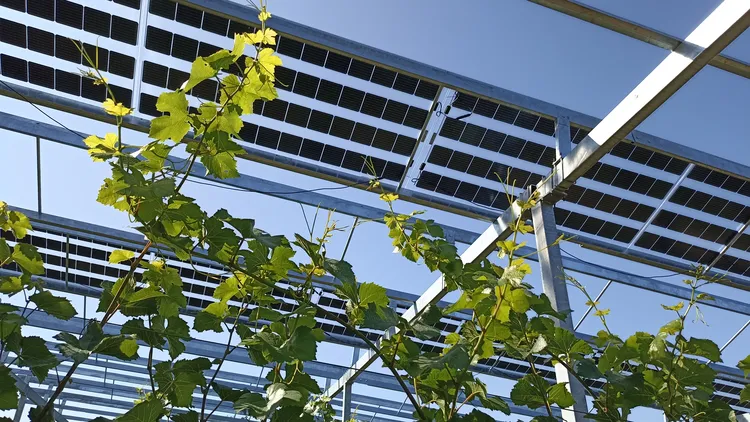
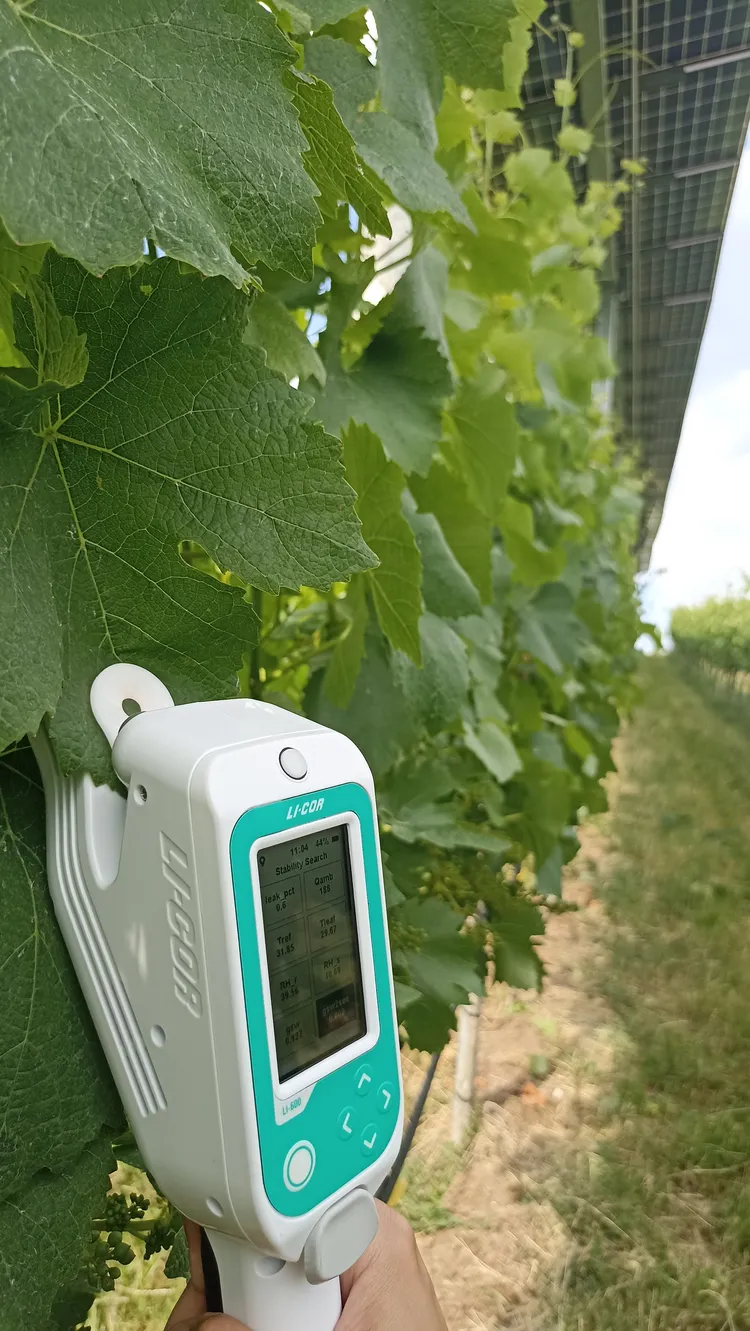
At the Ihringen-Blankenhornsberg site, experts from Staatliches Weinbauinstitut Freiburg (WBI), the state wine-growing research institute, are studying the effect of the shade cast by the PV modules on plant growth, grape quality and yield. For this, they measure various phenological parameters (leaf, flower and fruit development) and physiological parameters (transpiration, water-use efficiency, gas exchange). The researchers are also interested in the vines’ shade-avoidance strategies, since these could have an influence on the grapes and therefore on the yield or quality. For comparison purposes, WBI divided the area under the tracking system into three different shade regimes (light, moderate and dense shade). The vines under the static system are partially shaded. These PV modules have a transparency of 42%. The results are also compared with those from the tracking system. The plant consists of two removable systems:
- A fixedsystem (19 rows) with semi-transparent, bifacial PV modules (42% transparency)
→ 474 PV modules at 300 Wp (142 kWp)
- A tracking system with opaque PV modules with different outputs:
→ 4 rows with 200 PV modules at 415 Wp (83 kWp)
→ 3 rows with 78 PV modules at 500 Wp (43 kWp)
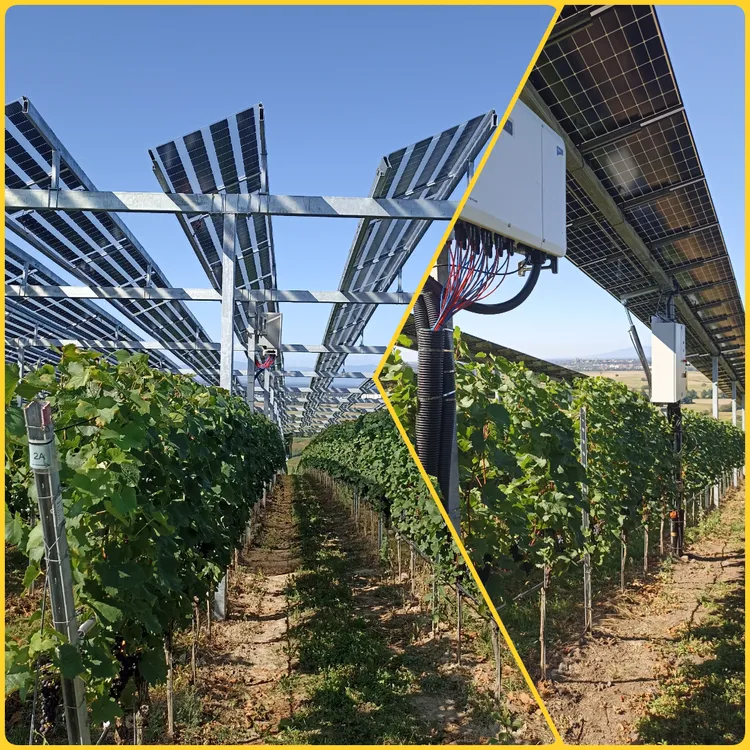
The tracking system, which can follow the path of the sun to increase electricity yields, can also be adjusted to the requirements of the vines. To achieve this, Intech is working with WBI to develop an anti-tracking algorithm to optimise the light intensity and the moisture levels in the leaves and soil, according to the development stage of the grapes. Remote access to the PV plant enables Intech to respond to changes in the weather to safeguard yield and quality.
Since the Viti-PV plant was commissioned in September 2024, all the energy it produces has been fed into the grid. It would also be possible to use the energy on site to run electrical equipment and machinery.
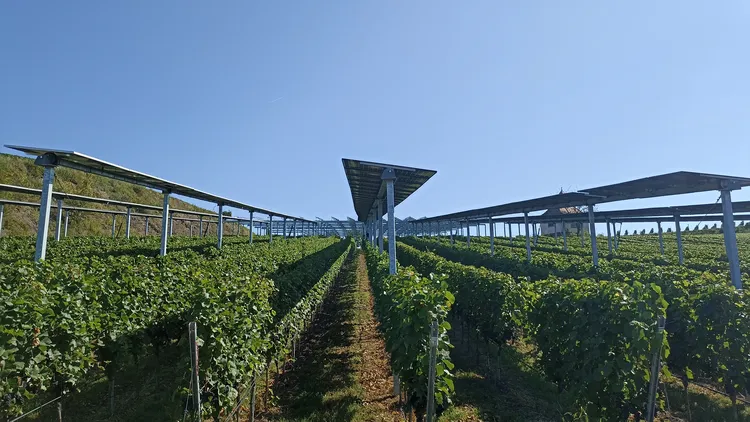
In 2024, the second grape harvest took place from the vines grown under the PV modules. Initial results from WBI show that the additional shade cast by the PV modules led to a later budburst and delayed ripening. This means the must weight increases more gradually and the grapes have a higher acidity than the unshaded grapes, which can have a positive influence on wine quality. The vines developed a larger leaf area (which varied, depending on the system) in response to the shade conditions. The institute also discovered that the temperatures under the PV modules were somewhat cooler in the summer, but fell less steeply during the late spring frosts, which means the grape vines had additional protection against late frost damage.
for the location