size
capacity



Dr. Nicolai Haag, Greta Ott
Landwirtschaftliches Technologiezentrum Augustenberg
agricultural research
Erik Füssgen
Stadtwerke Oberkirch
Stromabnahme
Christoph Vollmer
Intech GmbH & Co. KG
EPC

Overhead system with tracked and fixed modules
coordinates: 48°32'18.4"N 8°01'03.5"E
The projekt
Overview
Oberkirch-Nußbach is Ortenau in Mittelbaden – one of Germany’s best-known fruit-growing areas. The second of the project’s experimental agrivoltaic facilities was set up on the Fruit orchard Vollmer in this sun-drenched region in 2023. The farm, which has a direct selling business, produces pome and stone fruit, kiwis and grapes on around five hectares, and is managed part-time by Dr Hansjörg Vollmer. Over 20 years ago, Dr Vollmer, who also works as an engineer, founded Intech GmbH & Co. KG, a company for off-grid autonomous energy generation, which is now led by his son, Christoph Vollmer. This company, an associated project partner in the »Model Region Agrivoltaics for Baden-Württemberg« project, designed, developed and installed the PV plant.
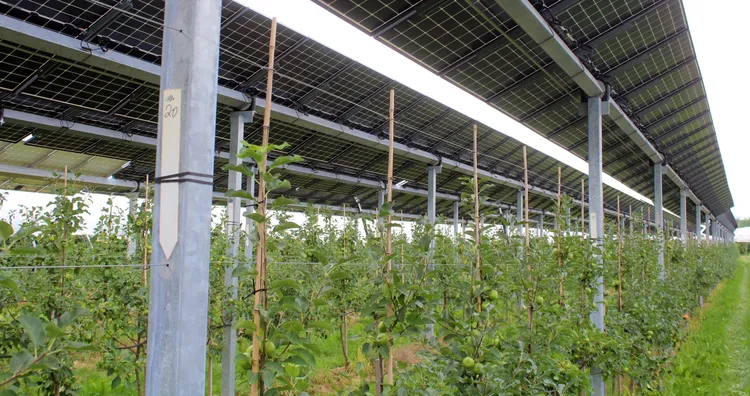
The facility is divided into three zones:
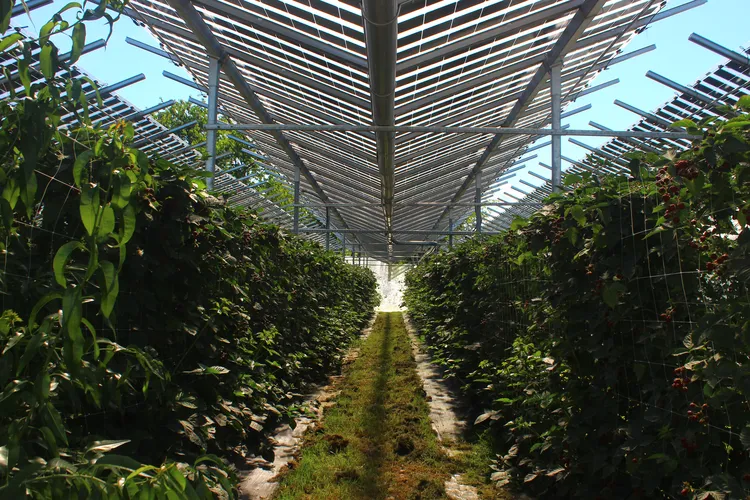
- a small, fixed agrivoltaic system with semi-transparent modules for blackberry production (0.2 ha);
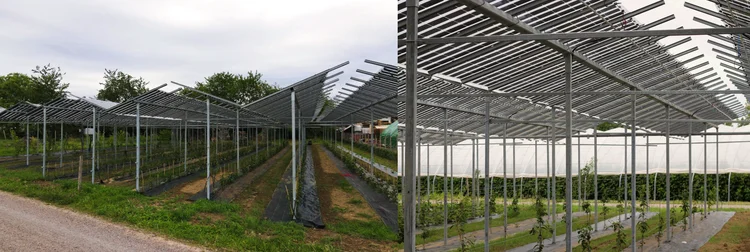
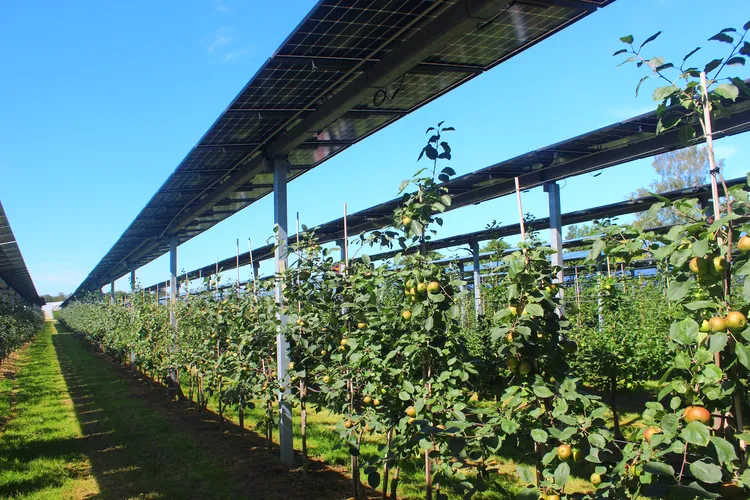
- a large, fixed system with bifacial modules for apple and pear production (0.5 ha, including a reference plot without PV modules);
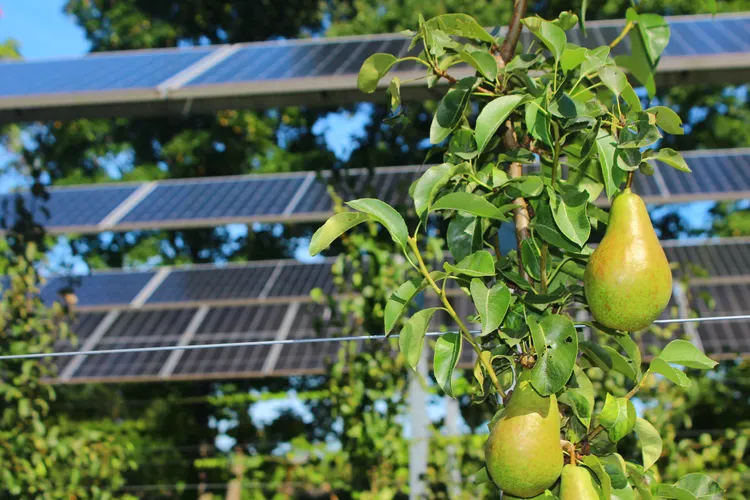
- and a tracking system with bifacial modules for apple and plum production (0.5 ha, including a reference area without PV modules).
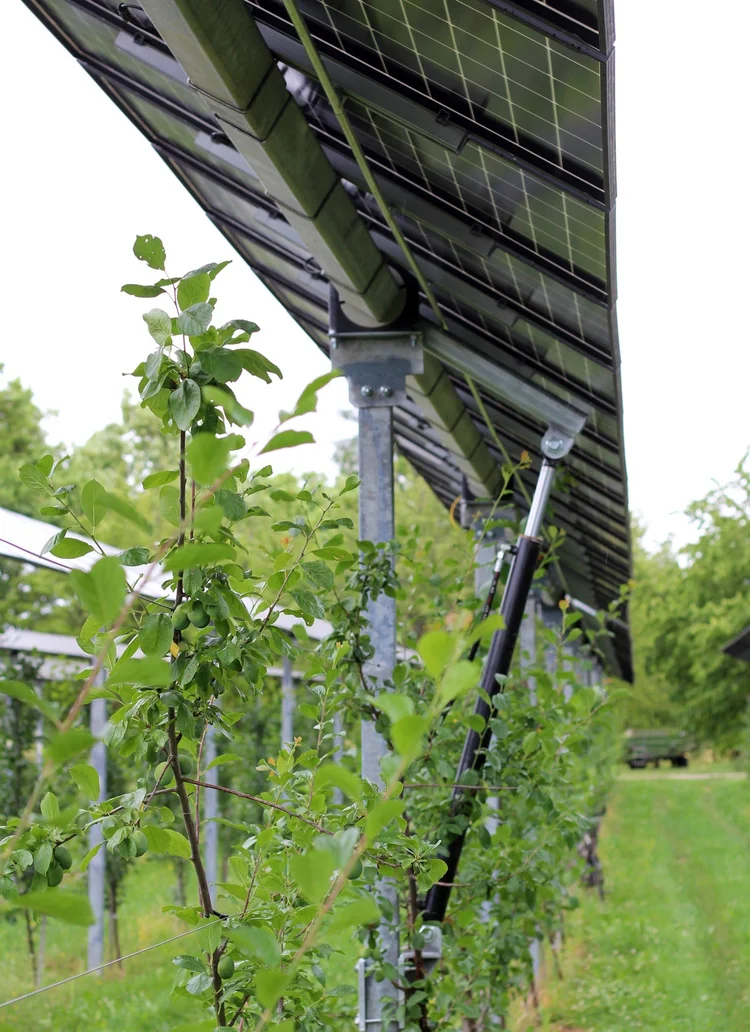
Unlike the other project sites, this one has a combination of different crops (pome fruit, stone fruit and soft fruit) and tracking on the fully shading PV modules. Programming for the tracking technology is currently being developed in collaboration with LTZ Augustenberg, in line with fruit-growing requirements, based on shading calculations produced by Fraunhofer ISE.
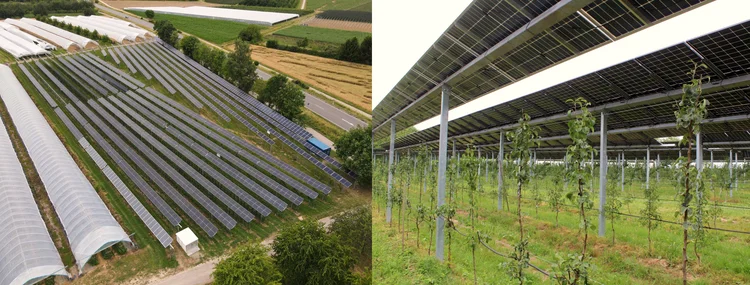
LTZ Augustenberg is responsible for the horticultural and phytosanitary research. Stadtwerke Oberkirch, a public utility company, is supporting the technical implementation and marketing of the power generated in Oberkirch-Nußbach as an associated project partner.
Tracking
Tracking systems are particularly suitable here in order to be able to address the specific cultivation needs of the different types of fruit grown on the site, and to create specific light and microclimate conditions within one growing season. With tracking systems, the PV modules follow the path of the sun, which means they generate higher energy yields than fixed modules. ‘Anti-tracking systems’ are also possible. Instead of following the path of the sun, these are controlled by a tracking algorithm, which can adjust the PV modules to create optimal plant conditions. An anti-tracking algorithm is currently being developed by Fraunhofer ISE and trialled at the Fruit orchard Vollmer. Accompanying research by LTZ Augustenberg is assessing the impacts on the fruit.
for the location