size
capacity
Prof. Dr. Barbara Benz, Sarah Kimmich
Hochschule für Wirtschaft und Umwelt Nürtingen-Geislingen
agricultural research
Stadtwerke Würzburg AG (Schöntal) und e.wa riss GmbH & Co. KG (Uttenweiler)
Stromabnahme
Enermation GmbH (Schöntal), BürgerEnergiegenossenschaft Riss eG (Uttenweiler)
EPC

Ground-mounted PV system with fixed modules
coordinates: 48°08'45.4"N 9°38'38.8"E
Ground-mounted PV system with fixed modules
coordinates: 49°18'19.4"N 9°31'30.6"E
The project
Overview
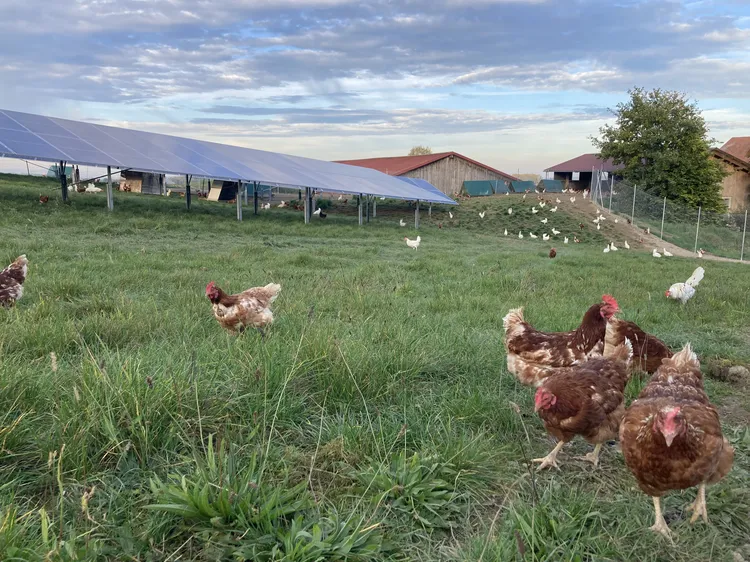
The combination of PV systems and free-range hens is becoming increasingly relevant in Germany, especially since eggs produced in these systems are no longer classed as barn-reared. The PV modules can offer protection in a number of different ways: they protect the animals against adverse weather conditions such as rain, wind and hail, and provide shade that reduces the risk of heat stress in hot sunshine. This effect is particularly relevant in hot, humid conditions – a combination which has been shown to have a negative impact on the well-being, productivity and health of hens. The PV modules can also act as a physical barrier against birds of prey, such as the goshawk. This is key to minimising animal losses and making the hens feel safer in the outdoor run.
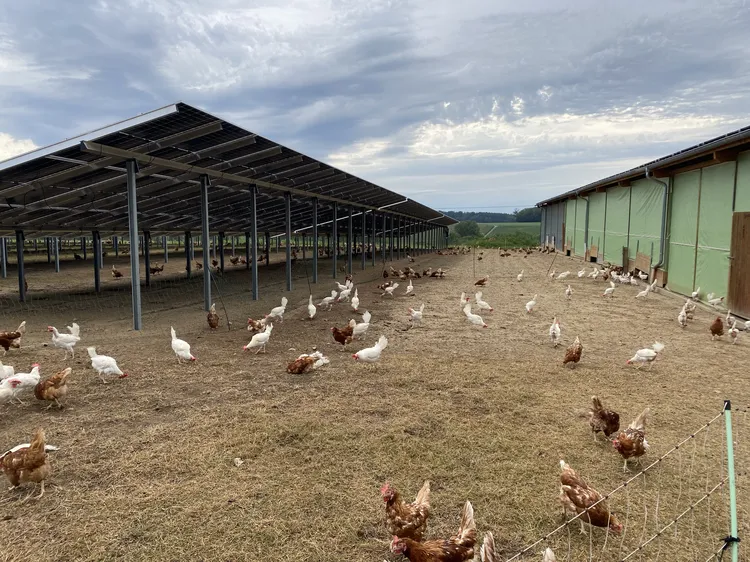
Within this project, practical decision-making aids are being developed both for interested farmers and for legislators. A particular focus of these recommendations is on animal behaviour, especially the hens’ acceptance of the PV system as a protection measure. In addition, the project is providing tips on optimum PV system configurations, focusing in particular on the orientation of the module rows in relation to the barn. Recommendations are also being drawn up on the effectiveness of the PV systems, with a focus on the achievable energy yield and work efficiency aspects. In order to maximise the knowledge base on which these recommendations are based, the following aspects are being studied:
- PV system: The suitability of various PV system concepts (e.g. height of substructure, module types, orientation of module rows, etc.), yield simulations of PV systems with different orientations (south-facing, east-west orientation and vertical)
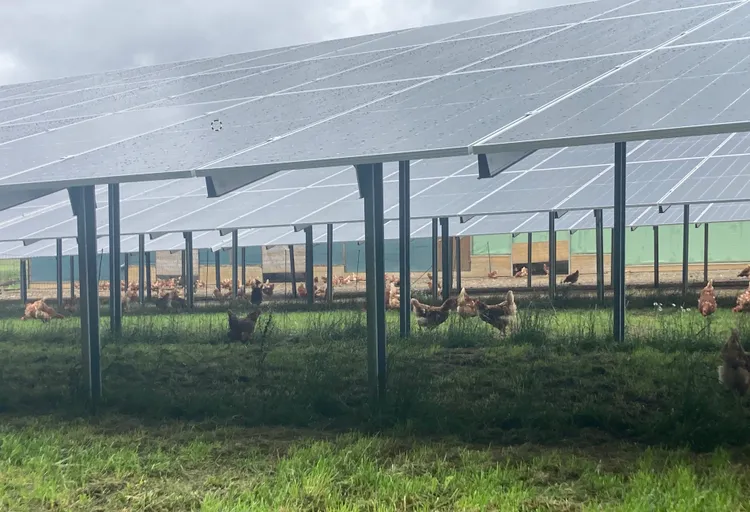
- Animal behaviour: Use of the chicken run (number of hens outdoors), the hens’ preferred locations and distribution of the hens in the chicken runs (with and without PV system), use of the PV system during extreme weather events (heavy rainfall, drought) and as protection against predators.
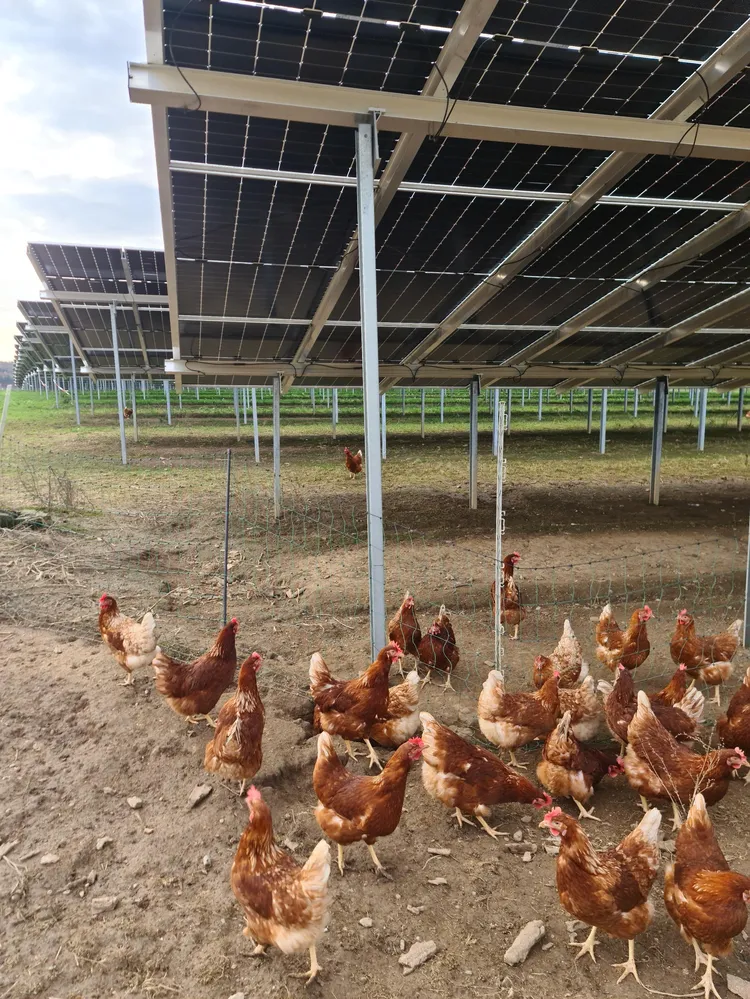
- Vegetation: Impacts of the PV system on the grassland, particularly in terms of plant cover, cultivation, water supply and the available photosynthetically active radiation
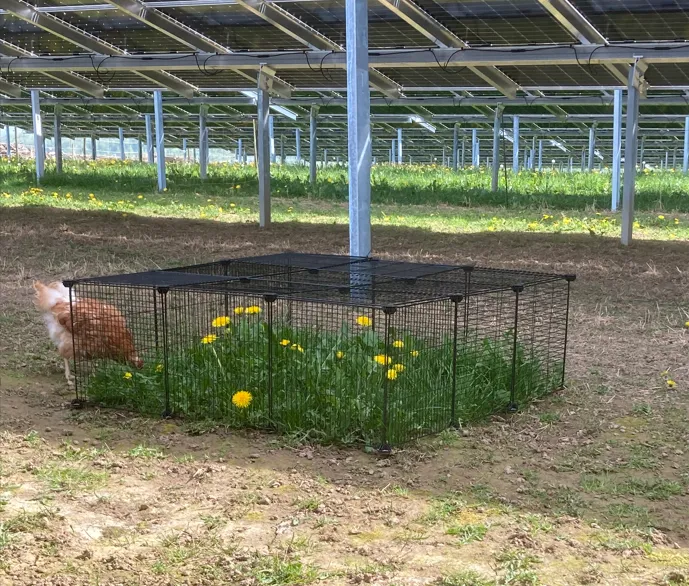
- Nutrients: Impact of the outdoor behaviour on nutrient inputs in the soil, especially nitrogen and phosphorus
Kombination Photovoltaik und Freilandhaltung Legehennen 1
Clicking on the preview image will redirect you to YouTube. The YouTube privacy policy applies there.
for the location